
Yard cleanup clears debris, weeds, and dead growth, cuts back overgrown plants, restores rock and planting beds, and leaves a property looking maintained and much easier to keep that way. In the Las Vegas Valley it also does something more specific: it is usually the step that reveals what a yard actually needs before any larger conversion work begins.
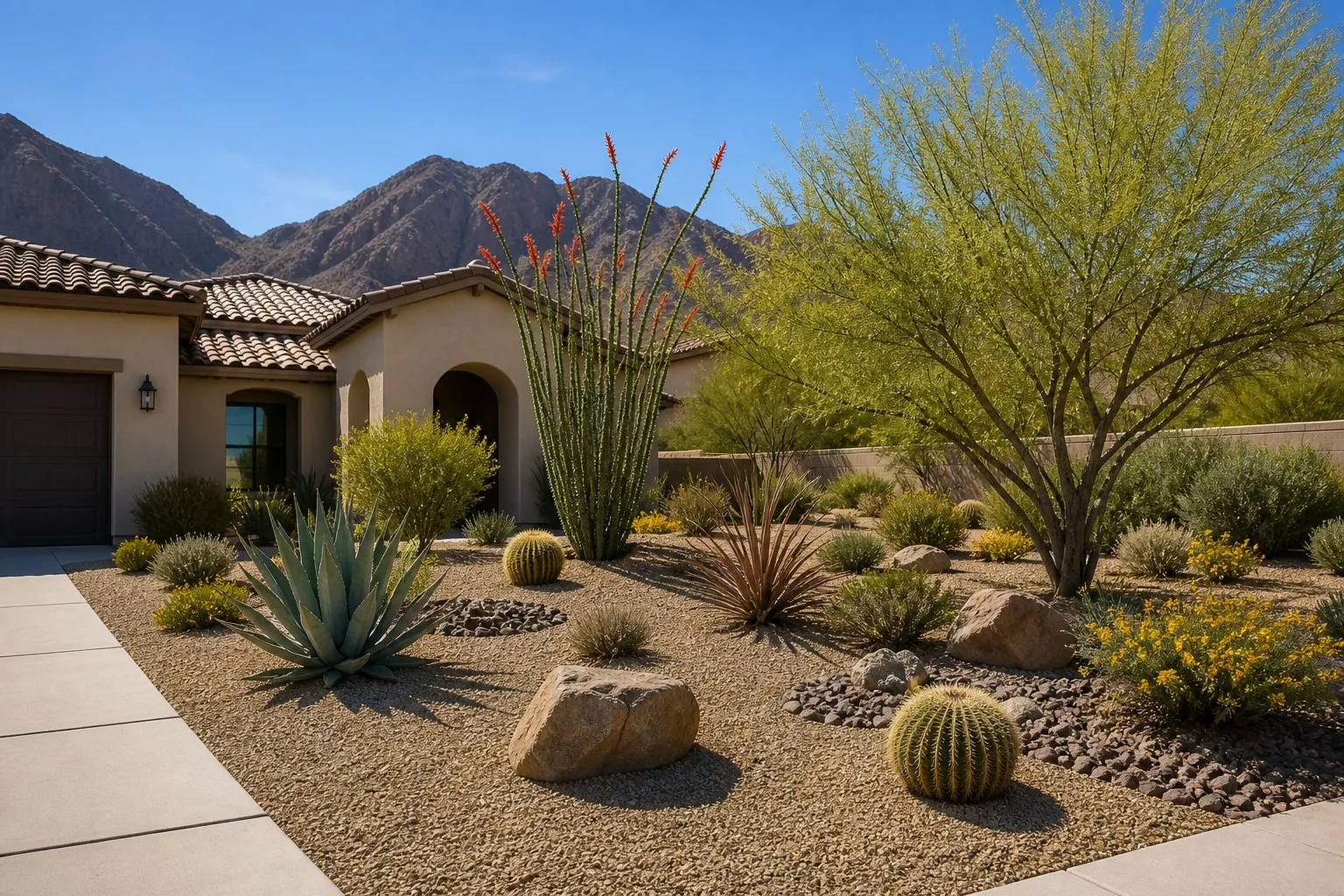
Mojave yards collect debris through wind rather than through leaf fall, which means it arrives unpredictably and lodges in the least convenient places — against walls and fences, into rock beds, and around the base of shrubs. Wind events can deposit in a single afternoon what would otherwise take a season.
The consequence goes beyond appearance. Organic material settling into rock and decomposed granite gradually forms a thin soil layer sitting on top of the weed barrier, and weeds then germinate in that layer — above the barrier installed to stop them. This is the usual explanation for a rock yard that stayed clean for two years and then suddenly did not. Removing that material before it establishes is far less work than dealing with what grows in it.
Debris also hides the faults you need to find: a cracked drip line, an emitter that has stopped, a basin that has silted up, or a plant that has started to fail. In a valley full of properties currently reworking their landscapes under AB356, that visibility is worth having before decisions are made.
Debris removal. Everything blown or washed in is cleared, including the accumulations along walls, fence lines, and bed edges where it piles deepest.
Weeding. Weeds are removed from rock, decomposed granite, beds, and hardscape joints. Clearing them before they seed is what makes the next visit smaller.

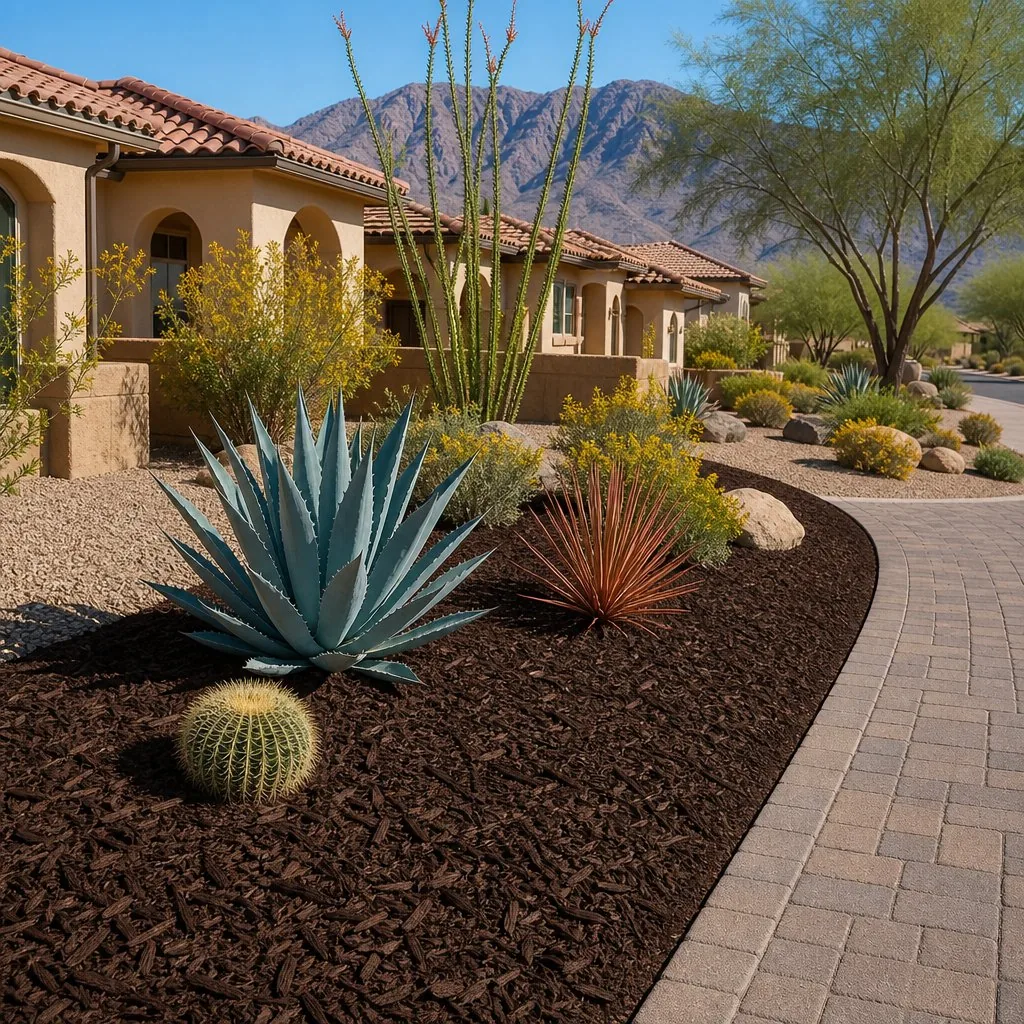
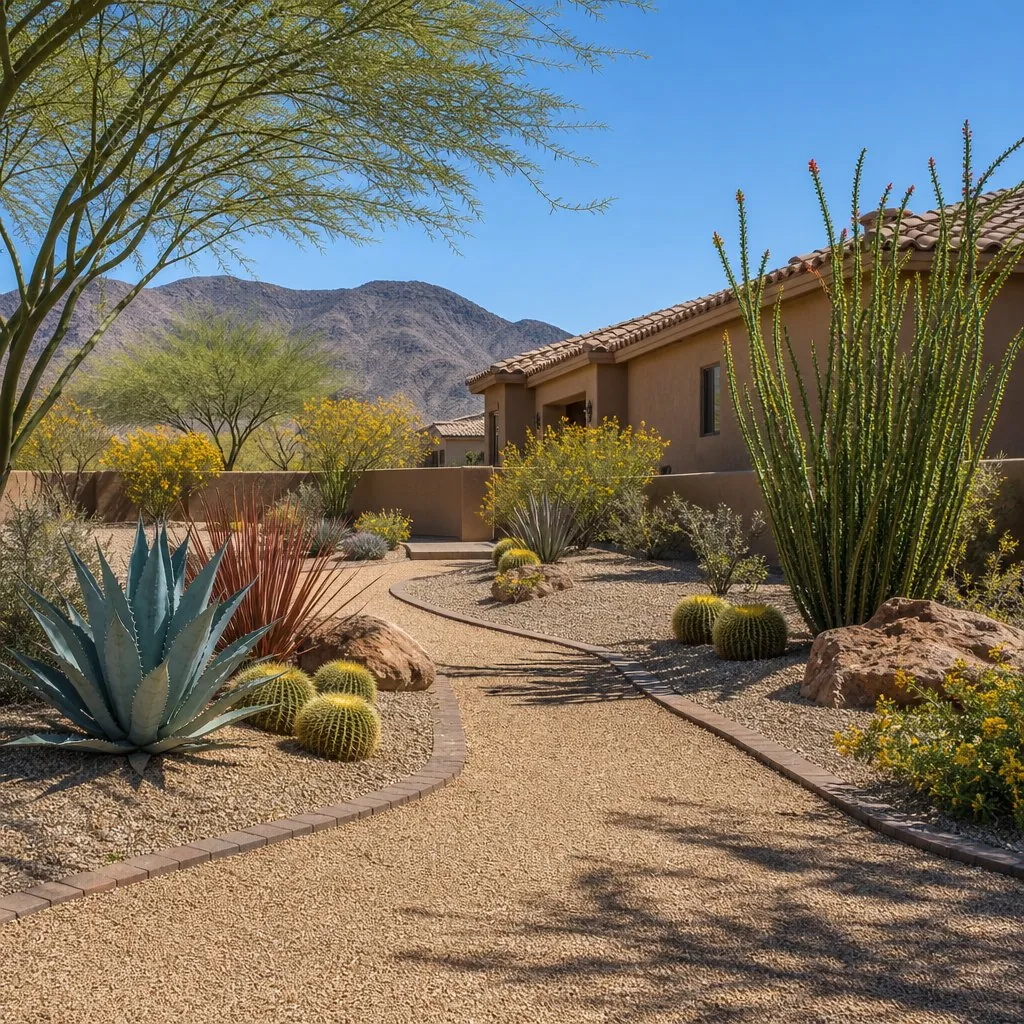
Cutting back. Overgrown shrubs and ornamental grasses are cut back to shape, dead growth is removed, and spent flower stalks are cleared.
Ground-cover restoration. Rock and granite displaced by wind or storm runoff are raked back to level, edges re-defined, and thin areas identified for topping up.
Las Vegas drainage pass: Photograph every basin, swale, downspout outlet, and erosion path before cleanup. Record sediment removal, rock displacement, drip-line exposure, and any point where water can reach pavement; keep irrigation repair separate from debris hauling in the written estimate.
Clear Las Vegas hardscape edges while keeping migrated rock out of drains and planted hydrozones.
Irrigation inspection. Zones are run and inspected while the yard is clear and every component is visible — by far the best opportunity to catch a fault.
Record Las Vegas debris volume and confirm the agreed haul-away area is empty.
Seasonal timing
Two cleanups a year suit most valley properties, positioned around the extremes rather than the calendar. A pre-summer visit clears accumulated debris, cuts back growth before the heat arrives, and — most valuably — confirms that irrigation is functioning before the season in which a failed emitter kills a plant in days rather than weeks. A post-summer visit clears what the heat burned off and what summer winds and storms deposited, and resets the yard heading into the cooler months.
Properties with mature trees, heavy wind exposure, or a position that collects runoff from higher ground usually do better on recurring visits than on two large resets.
Cost depends on property size, how overgrown things are, the volume of debris and green waste to haul, and whether this is a one-time reset or a recurring visit. The dominant factor is usually how long it has been. A maintained yard is priced as routine work; a yard left for a year or more is a reclamation job, with the debris volume and labour that implies. Access counts too, since everything removed has to be carried out. We quote after seeing the property.
Timeline
Most residential cleanups are completed in a single visit. Large lots or badly overgrown properties may need longer, and are sometimes better staged — bulk clearing and haul-away first, then detailed work on beds and plantings once the ground is visible.
Book a cleanup for a seasonal reset, after a windy stretch has filled the yard, when preparing a property to sell or rent, or whenever weeds and debris have simply gotten ahead of you. It is also the sensible first step before a larger project: if you are planning an AB356 turf conversion or a desert landscape build, clearing the property first means the design is made against what is really there.
Part of a proper cleanup is confirming that drip and sprinkler zones are clear, undamaged, and correctly programmed. In the valley that means checking the schedule against the Southern Nevada Water Authority’s rules: watering days assigned by address group, no sprinkler irrigation between 11 a.m. and 7 p.m. from May through August, and no sprinkler watering on Sundays year-round, with drip permitted up to four days per week in sessions of roughly 30 to 90 minutes. While we are on site we can run each zone, flag any head throwing water onto pavement, and confirm the controller matches your assigned days and the correct season. (Source: Southern Nevada Water Authority.)
Frequently asked questions
Is haul-away part of a Las Vegas yard cleanup? The proposal should identify accepted debris, excluded materials, load or volume assumptions, disposal charges, and the handling of anything left on site.
Can you set up recurring cleanups? Yes. Many valley properties do best on scheduled seasonal or monthly visits, which keeps each one small and inexpensive.
Do you handle weeds in rock and desert beds? Yes. Clearing weeds from rock, decomposed granite, and desert plantings is standard, as is raking those surfaces back to level.
Weeds keep returning through my rock. Why? Almost always because windblown organic matter has built a thin soil layer on top of the weed barrier, and weeds are germinating above it. Clearing that layer is the fix, not more barrier underneath.
My yard has been neglected for over a year. Is that a problem? No, it is a common starting point. It is priced as a reset rather than routine maintenance, and it is usually the moment recurring visits start to make sense.
Will you check my irrigation while you are here? Yes. We run the zones while the yard is clear and report what we find — blockages, breaks, misaligned heads, or a controller running a schedule that no longer fits the season.
Sources
Southern Nevada Water Authority — watering rules and Nevada AB356 turf requirements: snwa.com.
Plan a documented yard cleanup with Mojave soil constraints
Get a Free Quote
Describe the Mojave property priorities and the areas included in the request.
Set the Priorities for This Mojave Project
Identify the hot spots, water zones, access, and maintenance goals so the Las Vegas work can be estimated against a clear brief.
Get a Free QuoteFrequently Asked Questions
How should yard-cleanup scope account for a Las Vegas property's water budget?
Begin by separating planted, turf, hardscape and runoff areas, then document how each irrigated zone is intended to operate. The yard-cleanup scope recommendation should show which water demand it changes and which existing demand remains.
Where does reflected heat matter on this Las Vegas yard-cleanup scope project?
Walls, pavement and west-facing exposures can create different conditions within one property. Mark those surfaces during the site walk and evaluate materials or planting locations against the measured exposure rather than a citywide rule of thumb.
What evidence belongs in a Las Vegas yard-cleanup scope proposal?
Include a site sketch, measured quantities, irrigation observations, preparation details, named materials, exclusions and a cleanup plan. The proposal should connect every major action to a visible condition or owner priority.