
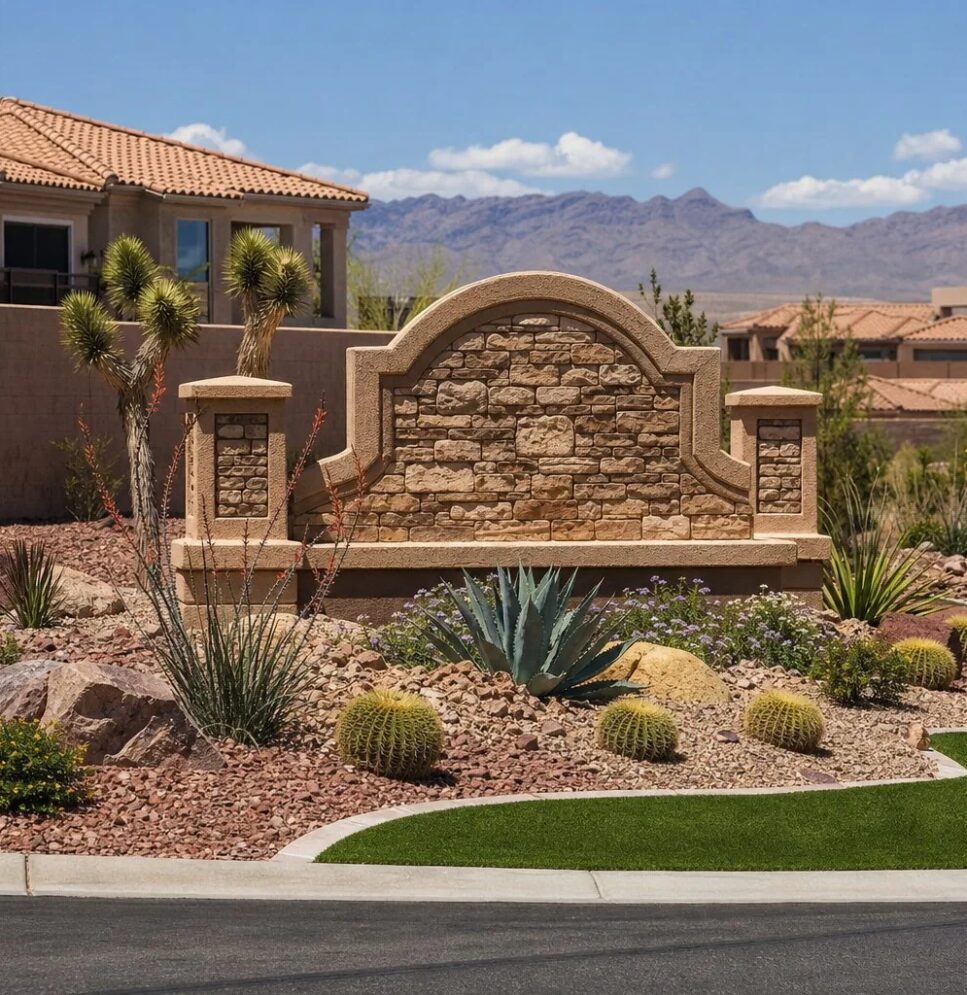
Treat timing choices as a planning consideration within editorial standards. Attach quantities, observations, and selections to the relevant property zone, then separate confirmed work from options that still await approval.
Planning considerations for Editorial Standards
For a Las Vegas property, what this local publishing desk covers — mojave about check means starting with observed conditions rather than a packaged answer. In this market, warm-season establishment is generally April through June, with sod extending toward early August; cool-season establishment favors February–March or mid-September–mid-October. This keeps the recommendation local, reviewable and reversible before installation begins.
How evidence is separated from estimates — Mojave about check
The useful question in Las Vegas is not whether an upgrade sounds attractive, but what evidence supports it. In this market, turf-type tall fescue for a cool-season lawn tradeoff and carefully selected warm-season or adapted groundcover choices; an adapted plant is not automatically native. Use it as a boundary for the scope, then verify the controller, soil and planting area before committing materials.
Planning considerations for Editorial Standards
This decision changes when the actual exposure, access and irrigation layout are written down. In this market, USDA zones 9a and 9b across sampled valley ZIP codes. The written plan should state which observation led to each proposed action and which condition remains unknown.
The Mojave constraint that changes the scope — Mojave about check
A defensible Mojave plan keeps the unknowns visible until the property is inspected. In this market, Nevada's nonfunctional-turf mandate addresses specified commercial and similar properties; do not turn it into a claim that residential turf is universally banned.. That fact belongs beside the site measurements so a recommendation can be tested instead of assumed.
Mojave field record for this about
For a Las Vegas property, log the SNWA watering group, each hydrozone and the depth reached by a soil probe before resistance. Photograph suspected caliche, reflected-heat walls, cold pockets and turf areas whose function is being evaluated. Identify whether a plant is Sonoran or Mojave native, southwestern native, or simply adapted; those labels are not interchangeable. Also record the property class before discussing Nevada’s nonfunctional-turf law. This Mojave worksheet separates a physical constraint, a program rule and a design preference. For this about page, circle the observation that would change the next decision and name who will verify it.
Bank the caliche depth, SNWA group and hydrozone map with the Mojave plan, because those three facts control different parts of the work. For this about decision, the current authority and photographed property condition control.
Treat timing choices as a planning consideration within editorial standards. Attach quantities, observations, and selections to the relevant property zone, then separate confirmed work from options that still await approval.
Planning considerations for Editorial Standards
Treat planning detail as a planning consideration within editorial standards. Attach quantities, observations, and selections to the relevant property zone, then separate confirmed work from options that still await approval.