Artificial turf gives a Las Vegas property a consistently green, genuinely usable surface with no irrigation and no mowing. With Nevada AB356 requiring nonfunctional turf across the valley to be removed by the end of 2026, synthetic turf has become one of the two standard replacements — the other being desert landscaping — for grass that is coming out.
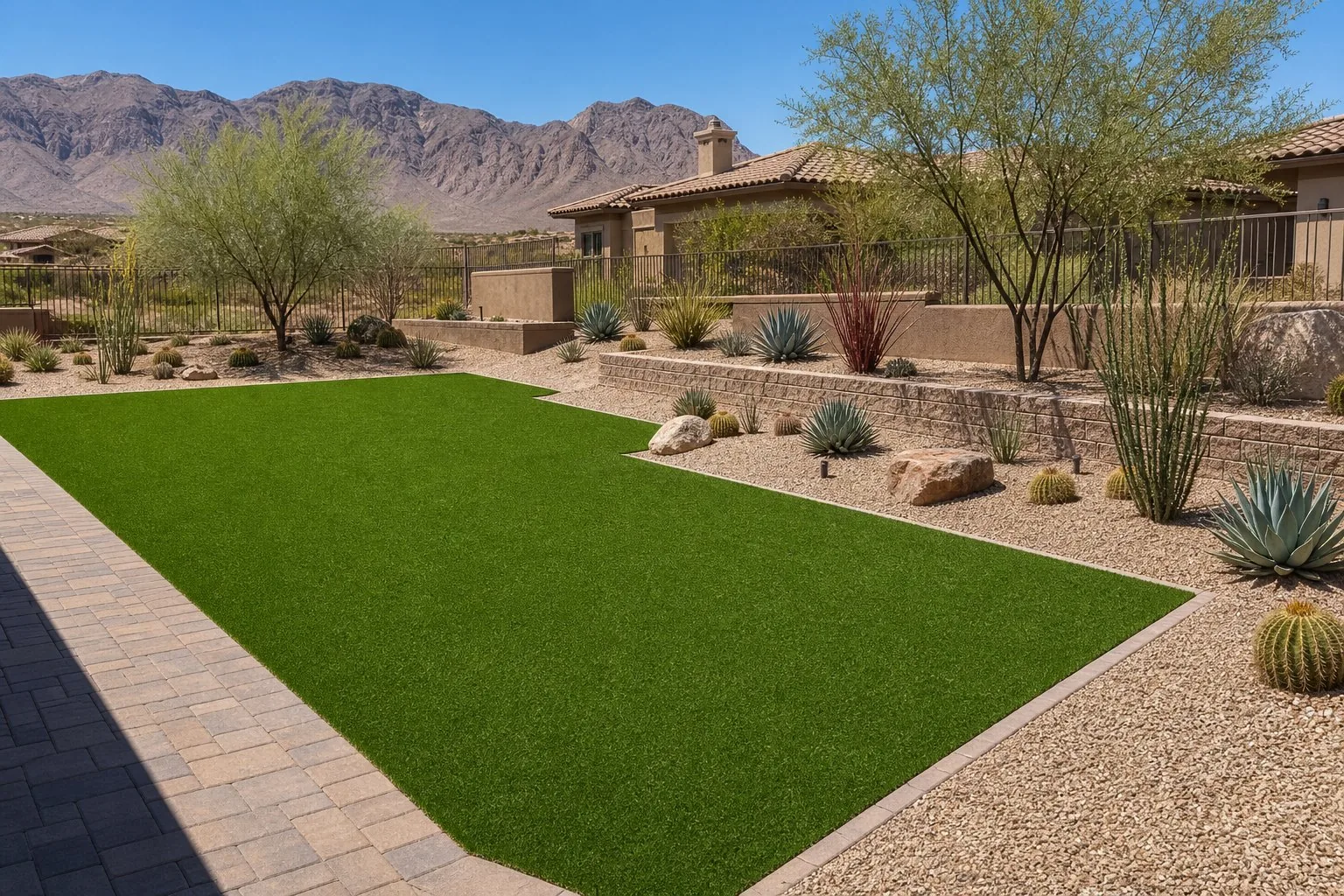
Under Nevada Assembly Bill 356, nonfunctional (decorative) turf in the Las Vegas Valley must be removed by December 31, 2026, with use prohibited from January 1, 2027. That leaves valley homeowners deciding what replaces it. Where the area in question is genuinely used — a play space, a pet run, a small front lawn that people actually walk on — artificial turf keeps the surface and the use while removing the irrigation entirely.
It also sidesteps the watering rules completely. SNWA assigns sprinkler days by address group, prohibits sprinkler irrigation between 11 a.m. and 7 p.m. from May through August, and prohibits sprinkler watering on Sundays year-round. A surface that is never irrigated is simply outside all of it.
Nearly every artificial turf disappointment traces to the base rather than the turf. The visible product is the last and easiest part of the job.
Excavation. Grass, roots, and soil are removed to a depth that leaves room for a proper base. Laying turf over existing soil produces settling, dips, and drainage that fails the first time it rains hard.
Las Vegas conversion record. Map the removal area and existing irrigation first, then require the proposal to state excavation depth, aggregate type and lift sequence, compaction standard, drainage path, edge restraint, and final elevation. Keep these measurable base requirements separate from the turf product selection so bids can be compared line by line.
Drainage. Mojave rain is infrequent but intense. The base is graded so a storm drains through and away rather than pooling, with additional drainage built where the site needs it.
Weed barrier. A permeable barrier over the finished base stops growth from beneath while still passing water.
Turf, seaming, anchoring. Turf is laid with pile direction consistent across the area, seamed, and secured at every edge. Inconsistent pile direction is what makes an install read as panels rather than lawn.
Infill. Infill is brushed in to weight the turf, keep blades upright, and protect the backing. It sets how the surface feels and how well it recovers.
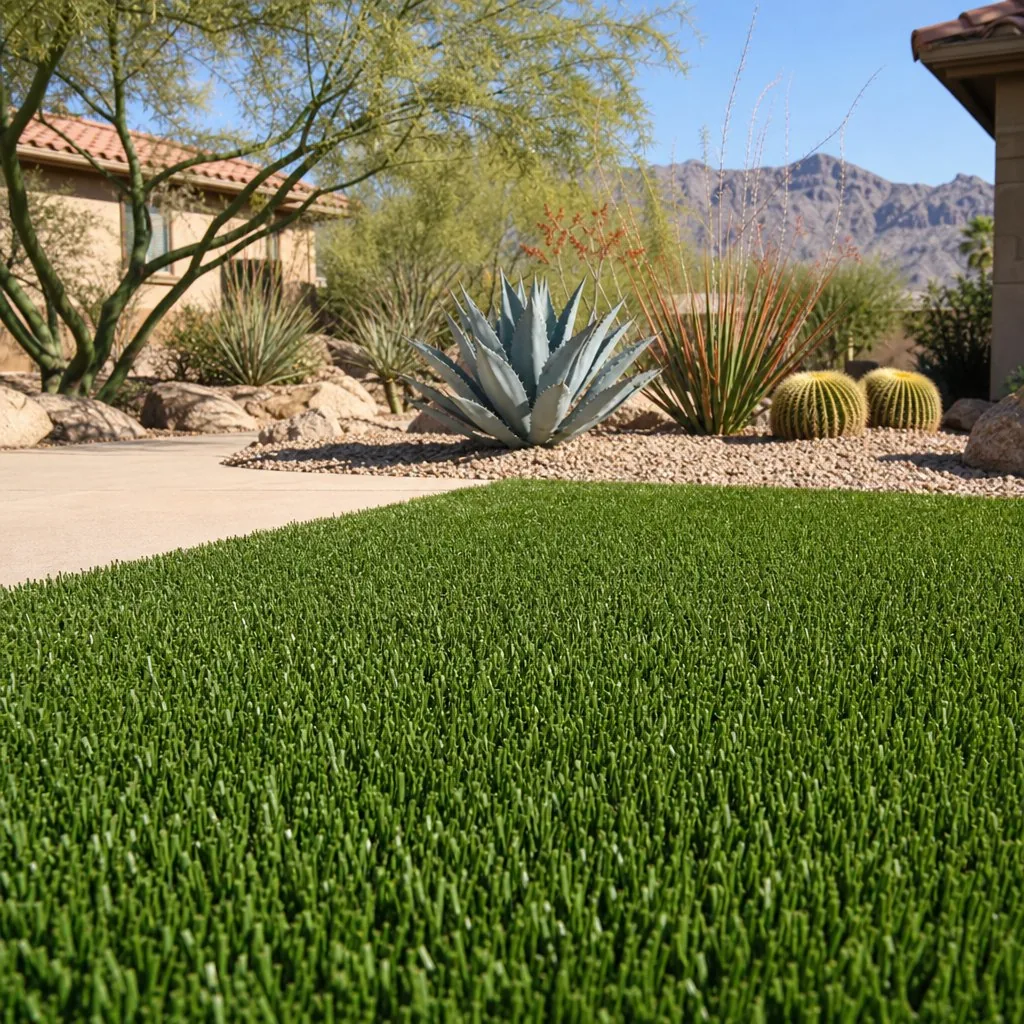
Specification follows use. A dense, lower pile with high face weight handles heavy foot traffic and recovers well, suiting play areas and pet runs. A longer, softer pile reads more like an unmown lawn and suits ornamental areas that are viewed more than used. Pet installations need freely draining backing and an infill selected with odour in mind. Fitting an ornamental product into a high-traffic area is the most frequent specification mistake, and it shows within a season.
Cost is driven by square footage, how much existing lawn or hardscape must be removed and hauled, the base preparation and drainage required, the turf product and pile selected, and infill and edging. Access matters, since base aggregate is heavy and every yard of it has to reach the work area. Caliche slows excavation where it is encountered. Small, awkward, heavily prepared areas cost more per square foot than large open ones. We measure and quote on site.
Timeline
Most residential installations are completed within a few days: removal and grading, then base placement and compaction, then turf, seaming, infill, and edging. Base work takes the largest share of the time, and compaction cannot be rushed — time saved there returns later as settling.
With the AB356 deadline fixed, scheduling ahead of the rush is worth doing. Conversion work across the valley concentrates as the date approaches.
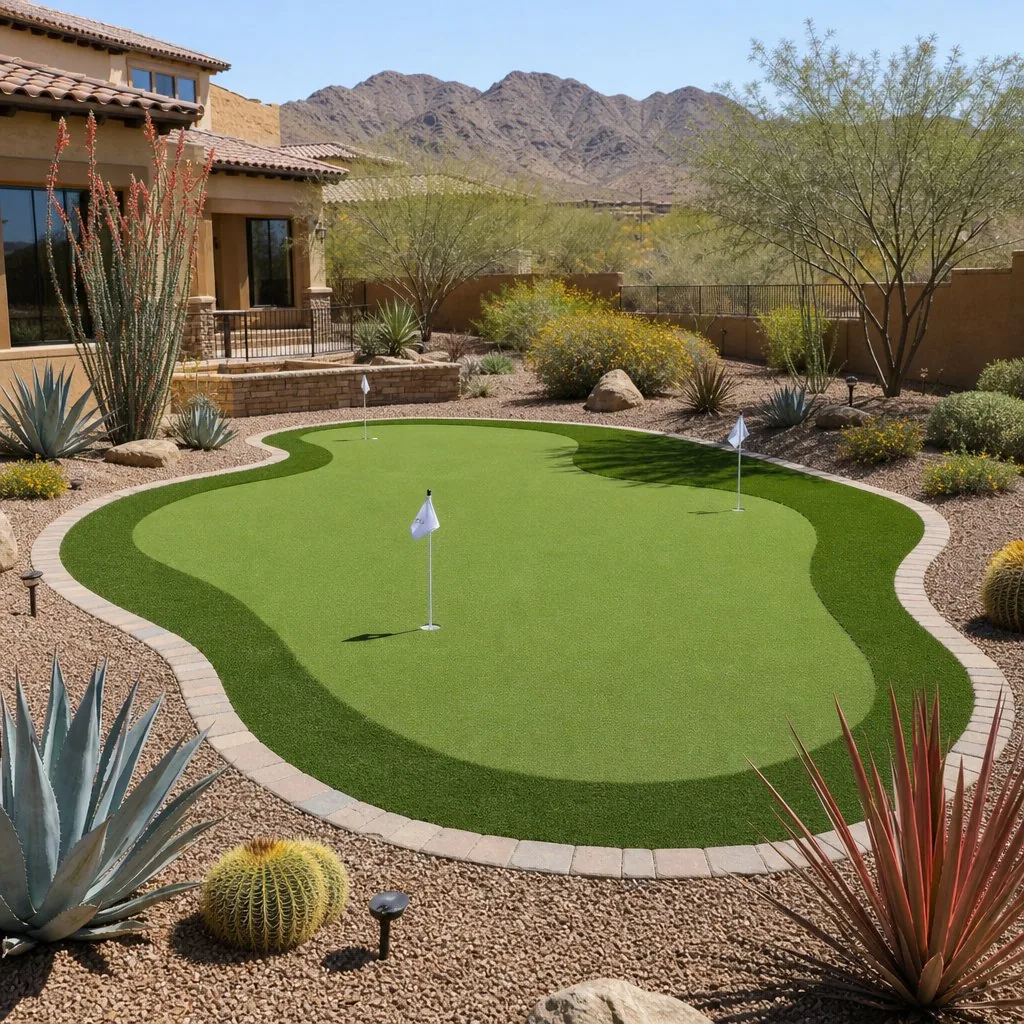
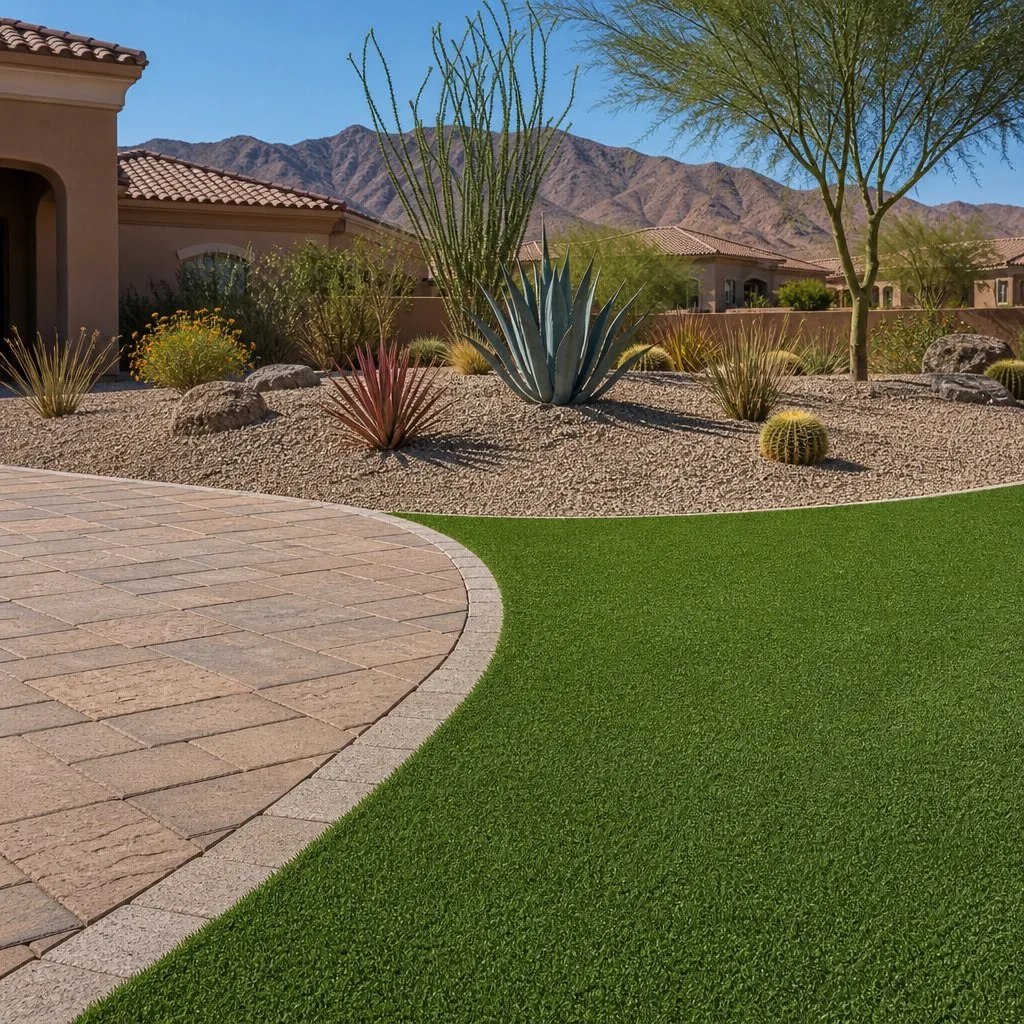
Artificial turf is the right answer where a green surface is genuinely used and you want it without irrigation: play areas, pet runs, small front lawns, courtyards, and narrow side yards where natural grass struggles anyway. It is a weaker answer wall-to-wall across a large property, where cost climbs steeply and a large uniform expanse can read as artificial. On most valley lots the strongest result combines a defined turf area with desert landscaping across the remainder — which is also, conveniently, the shape most AB356 conversions naturally take.
Local relevance: AB356 and the SNWA watering rules
Nevada AB356 requires nonfunctional (decorative) turf in the Las Vegas Valley to be removed by December 31, 2026, with use prohibited from January 1, 2027. AB356 addresses natural decorative grass; artificial turf and desert landscaping are the common replacements. Separately, SNWA assigns watering days by address group, prohibits sprinkler irrigation between 11 a.m. and 7 p.m. from May through August, and prohibits Sunday sprinkler watering year-round. Artificial turf requires no irrigation at all, so none of the watering restrictions apply to it and it produces no runoff. (Sources: Nevada AB356 and the Southern Nevada Water Authority.)
Maintenance is light but real. Debris is cleared as it arrives, the pile is brushed periodically along traffic lanes to keep blades standing, and infill is topped up as it settles and migrates over the years. Pet areas benefit from periodic rinsing. Done routinely these take minutes; skipped for years, matted pile and depleted infill are what make an older installation look its age.
Frequently asked questions
Does artificial turf satisfy the AB356 grass-removal requirement? AB356 requires the removal of nonfunctional natural (decorative) grass. Artificial turf and desert landscaping are the common replacements once that grass is out.
Does it need watering? No irrigation at all. An occasional rinse for cleanliness is the only water it sees, so the SNWA sprinkler restrictions do not apply to it.
Does it get hot in the Las Vegas sun? It warms in direct sun as any surface does. Product and infill selection, shade, and a rinse before use manage surface temperature; shaded installations run considerably cooler than fully exposed ones.
For Las Vegas yards used by dogs, define upkeep before choosing turf. Mark the high-traffic and relief areas, decide how solids and rinse water will be handled, and document shade exposure. Compare candidate systems through their written drainage, infill, warranty, surface-temperature, and cleaning specifications rather than a blanket suitability promise.
What happens when it rains hard? Water passes through the permeable backing into the compacted base and drains away, which is precisely why base construction and grading matter.
How long does it last? Quality turf provides many years of service. Realistic lifespan depends on the product specification, the traffic it carries, and whether the base beneath it was built properly.
Sources
Southern Nevada Water Authority — Nevada AB356 turf requirements and watering rules: snwa.com.
Review an artificial-turf scope with Mojave soil constraints
Get a Free Quote
Describe the Mojave property priorities and the areas included in the request.
Set the Priorities for This Mojave Project
Identify the hot spots, water zones, access, and maintenance goals so the Las Vegas work can be estimated against a clear brief.
Get a Free QuoteFrequently Asked Questions
How should artificial-turf planning account for a Las Vegas property's water budget?
Begin by separating planted, turf, hardscape and runoff areas, then document how each irrigated zone is intended to operate. The artificial-turf planning recommendation should show which water demand it changes and which existing demand remains.
Where does reflected heat matter on this Las Vegas artificial-turf planning project?
Walls, pavement and west-facing exposures can create different conditions within one property. Mark those surfaces during the site walk and evaluate materials or planting locations against the measured exposure rather than a citywide rule of thumb.
What evidence belongs in a Las Vegas artificial-turf planning proposal?
Include a site sketch, measured quantities, irrigation observations, preparation details, named materials, exclusions and a cleanup plan. The proposal should connect every major action to a visible condition or owner priority.