Review Las Vegas landscape examples organized around intense exposure, water zones, hardscape, and comfortable outdoor use.
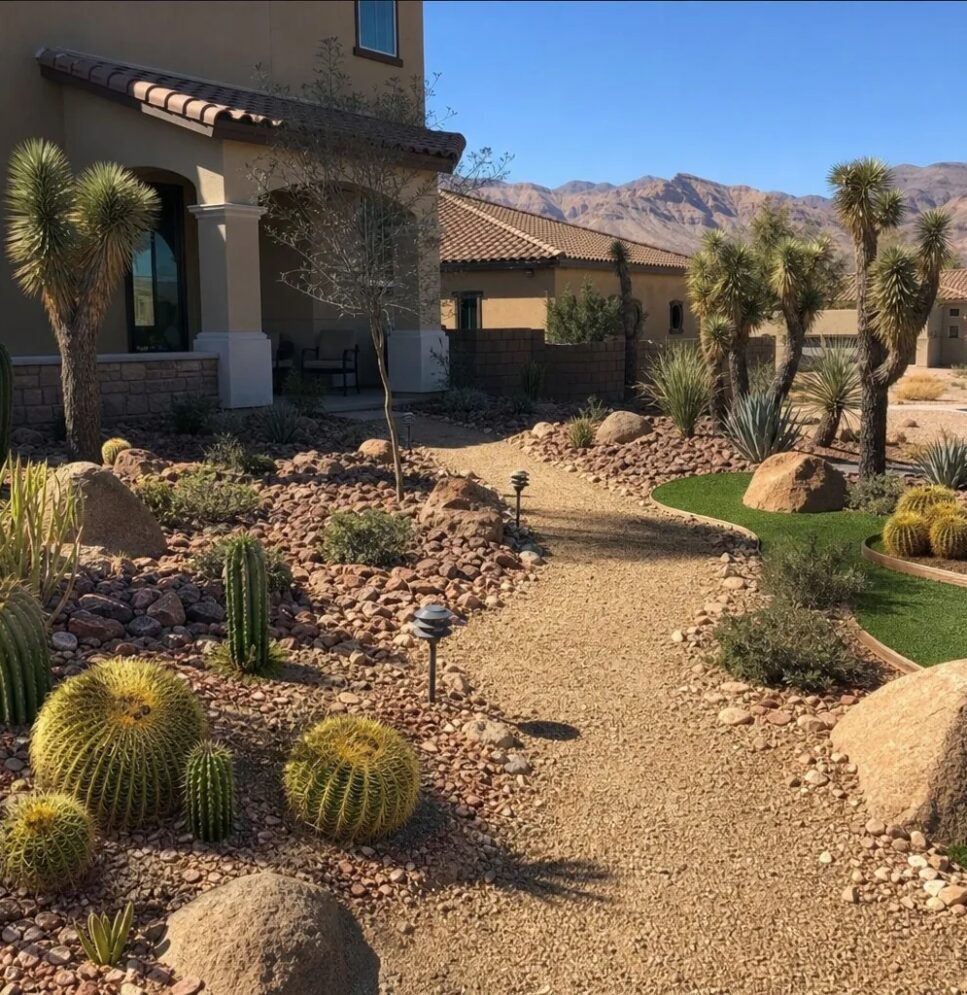
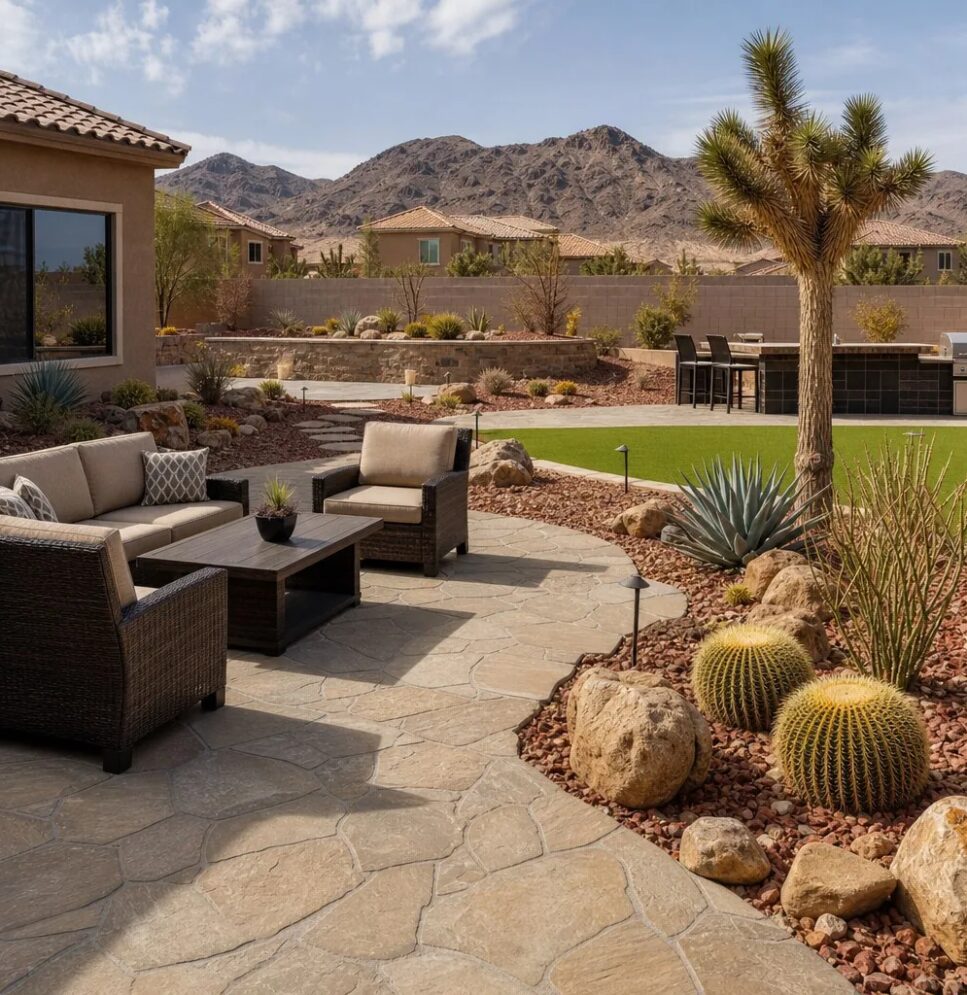
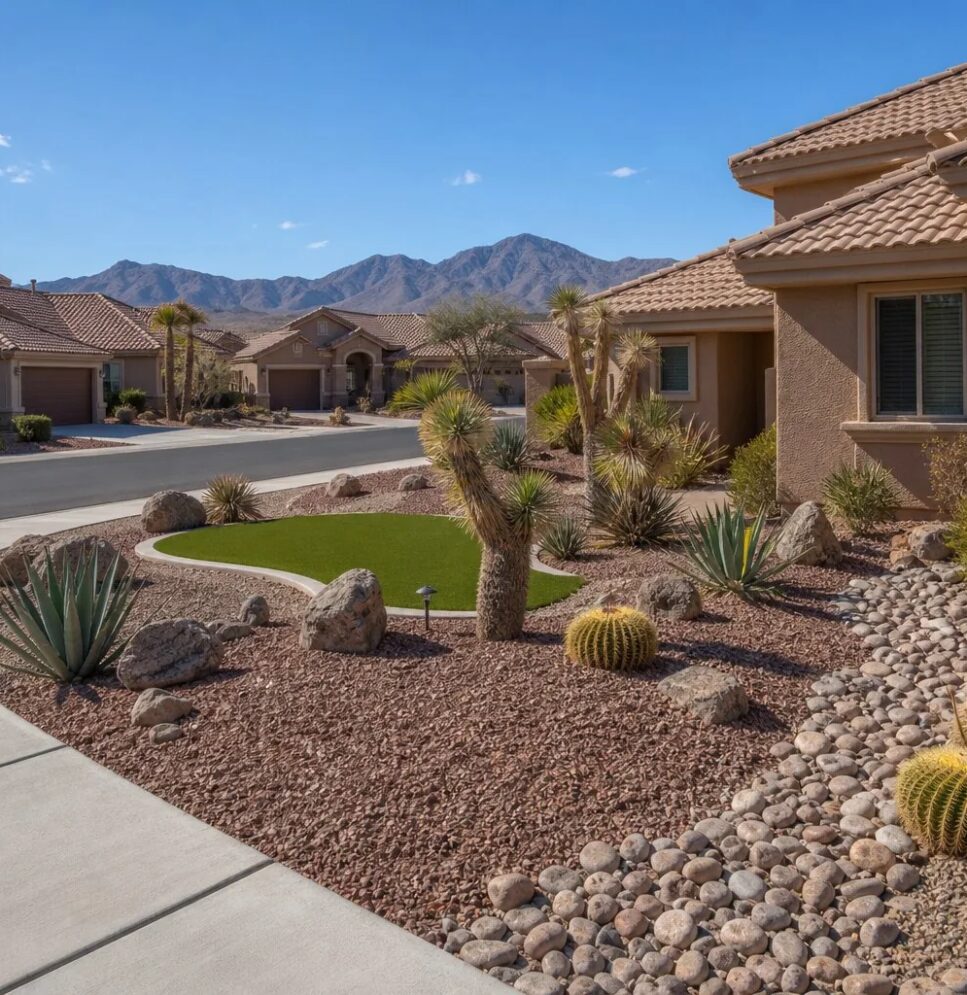
Las Vegas Landscape Pros is a local landscaping company serving homeowners across Las Vegas and Clark County. We build and maintain yards for the Mojave Desert climate – the heat, the soil, and the water rules set for the Las Vegas Valley. Every job is done by a local crew and every quote is free.
Outdoor watering in the Las Vegas Valley is governed by mandatory seasonal restrictions. The Southern Nevada Water Authority (SNWA) sets the seasonal watering schedule, and the Las Vegas Valley Water District (LVVWD) assigns each address a watering group that determines which days you may irrigate. Nevada law also restricts irrigation of non-functional turf with Colorado River water in Southern Nevada.
Restrictions change by season, so confirm the current schedule and your group before adjusting a controller:
Official sources reviewed 4 August 2026. We program every controller we install or service to the current assigned days.
We work on desert yards from end to end – clearing and maintaining what is already there, rebuilding what is failing, and installing irrigation and hardscape that hold up in Mojave conditions. Most Las Vegas properties need some mix of water-efficient planting, reliable drip irrigation, and surfaces that survive full summer sun. Everything below is delivered by our own crew, and every project starts with a free written estimate.
Seasonal debris cleared, beds edged to a defined line, weeds suppressed at the root, gravel raked back to grade and the whole lot hauled away – on a recurring schedule or as a single reset.
Structural pruning, deadwood taken out, crowns thinned for wind, and growth pulled clear of roofs, walls and utility lines. Cuts are made at the branch collar so wounds close cleanly. Debris is hauled off.
The base is excavated, an aggregate sub-base compacted to a firm plane, weed barrier laid, and the turf seamed and nail-anchored before infill is brushed up to blade height. Edges are secured so seams stay flat through summer heat.
Zones are designed around plant water needs, emitters and heads laid out, pressure regulated and backflow-safe connections made, and the controller programmed to your assigned watering days. Existing systems are repaired as well as new ones built.
Drought-adapted planting, decorative rock and boulders placed deliberately, grading that moves summer storm water away from the house, and hardscape edging that keeps its line under heat movement.
Grounds maintenance and installation for offices, retail centres, HOAs and apartment communities, scheduled so tenant and customer access is never blocked.
Single properties, front and back yards, HOA-facing frontages and full desert conversions. Work is booked in day or half-day blocks, and we confirm a time window the day before so you are not waiting. You get one point of contact from estimate to final walk-through.
Offices, retail centres, apartment communities and common areas. Grounds work is scheduled around business hours and tenant access, with recurring maintenance visits agreed in advance and a project plan so property managers can budget the year. See commercial planning →
We do not publish a single price list, because a fair number depends on things we have to see: the size of the lot, how much material comes out, access for equipment, the condition of any existing irrigation, and the finish you want. Two yards on the same street can differ by a wide margin.
What you get instead is a free written estimate. We walk the property, measure the areas that matter, and put the scope in writing – the work included, the materials specified, and the price. That written figure is what you are asked to approve. We do not start work, and you are not charged, until you have it in hand and agree to it. If the scope changes once work is under way, we stop and re-quote in writing before continuing.
For how Las Vegas pricing is actually structured – what drives cost up and what brings it down – read our Las Vegas Landscaping Pricing Guide, or call (702) 766-4082 and we will talk through your yard before anyone visits.
Las Vegas sits in the Mojave Desert at roughly two thousand feet, and the growing conditions punish anything that was not chosen for them. Summer air temperatures run well above one hundred degrees for weeks at a time, and the rock and hardscape around a planting bed hold that heat long after sunset, so roots stay warm through the night. Annual rainfall is a small fraction of what most turf grasses need, which means effectively all of a landscape’s water arrives through irrigation that someone has to design, schedule and maintain.
The soils across the valley are typically alkaline and low in organic matter, and many sites sit over a hardened caliche layer that water will not pass through. That layer is the reason so many desert plantings fail even when the plant choice was right: the hole holds water like a bucket, roots sit wet, and the plant declines from the bottom up. Where we find caliche, we break through it or re-site the planting rather than fill the hole and hope.
Water rules shape the rest. Outdoor irrigation in the valley runs on mandatory seasonal watering days assigned by address, and Nevada has moved to remove non-functional turf irrigated with Colorado River water across Southern Nevada. Practically, that means decorative lawn is a shrinking option and well-built desert landscaping is the durable one – drought-adapted planting, efficient drip, and surfaces that look intentional rather than bare. Grading matters more than people expect, too: the valley’s rain arrives in short, intense summer storms, and a yard that has not been graded to move that water will send it toward the foundation.
Reading further before you commit is reasonable. Our guide to choosing a Las Vegas landscaper sets out what to compare between companies – how scope is written, what a quote should itemise, and the questions worth asking before you sign anything.
We cover Las Vegas and the surrounding Clark County communities listed below. Each has its own page with local detail.
Reference material written for this valley – soil, water rules, plant selection and seasonal timing.
Begin by separating planted, turf, hardscape and runoff areas, then document how each irrigated zone is intended to operate. The whole-property landscape planning recommendation should show which water demand it changes and which existing demand remains.
Walls, pavement and west-facing exposures can create different conditions within one property. Mark those surfaces during the site walk and evaluate materials or planting locations against the measured exposure rather than a citywide rule of thumb.
Include a site sketch, measured quantities, irrigation observations, preparation details, named materials, exclusions and a cleanup plan. The proposal should connect every major action to a visible condition or owner priority.
Most people contacting us are deciding between three things: maintain what is there, repair an irrigation system that is no longer keeping plants alive, or convert the yard to desert landscaping and stop fighting it. You do not have to work that out before you call. Tell us what is going wrong – the water bill, the bare patches, the plants that keep dying – and we will look at the property and tell you which of the three we would actually recommend, including when the answer is the cheaper one.
The visit and the written estimate are free, and nothing starts until you approve the scope in writing.
Treat project-planning request as an evidence decision within property planning. Attach quantities, observations, and selections to the relevant property zone, then separate confirmed work from options that still await approval.
Describe the Mojave property priorities and the areas included in the request.
A straightforward quote from a local professional, with no obligation and no pressure.