
Tree trimming keeps desert and shade trees structurally sound, safe, and well-shaped by removing dead, damaged, and crossing limbs and clearing growth away from roofs, drives, walls, and overhead lines. In the Las Vegas Valley, where summer heat is extreme and wind events arrive suddenly, that work protects the single most valuable living asset most properties own.
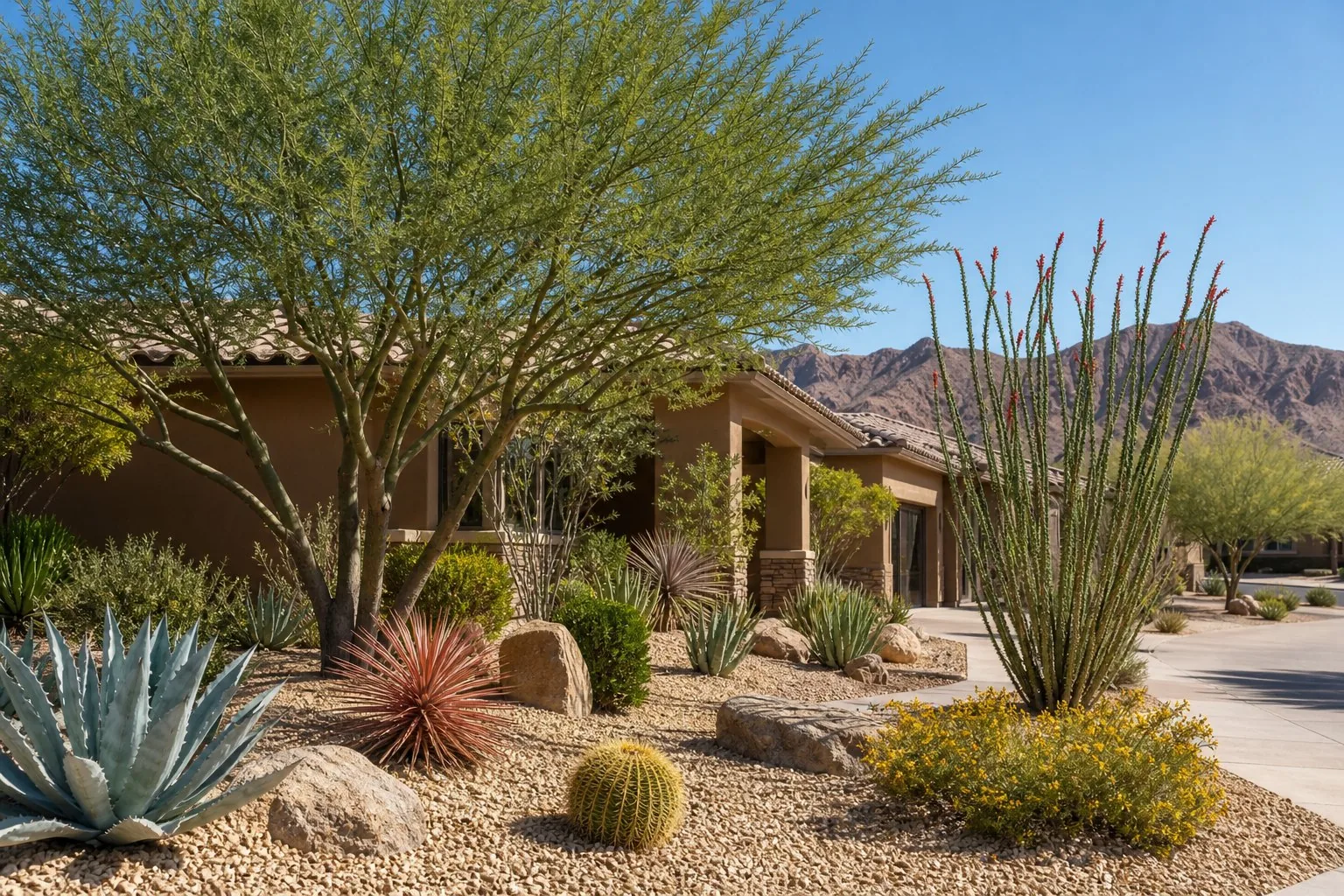
Shade is worth more here than almost anywhere. A mature canopy lowers the surface temperature of everything beneath it, reduces the cooling load on the house, and cuts the water requirement of the plants growing in its shadow. It also takes years to establish and cannot be replaced on any useful timescale.
Valley conditions put particular stress on trees. Wind events work on every weak union and overextended limb. Extreme summer heat pushes a tree hardest exactly when it is carrying its greatest leaf area. And trees in irrigated landscapes frequently develop shallow root systems, because frequent light watering never encourages roots to go deep — which leaves them poorly anchored when wind arrives.
This last point connects directly to the valley’s ongoing conversion work. As landscapes are reworked under AB356 and irrigation is changed, established trees can find their water source moved or reduced. Trees within a conversion area need their irrigation deliberately carried over, not left to chance.
Assessment. The tree is read as a structure before anything is cut: where the weight sits, which unions are sound, what is dead, what rubs, and what is heading toward a roof, a wall, or a line.
Prioritize documented deadwood and Las Vegas clearance conflicts before optional shaping.
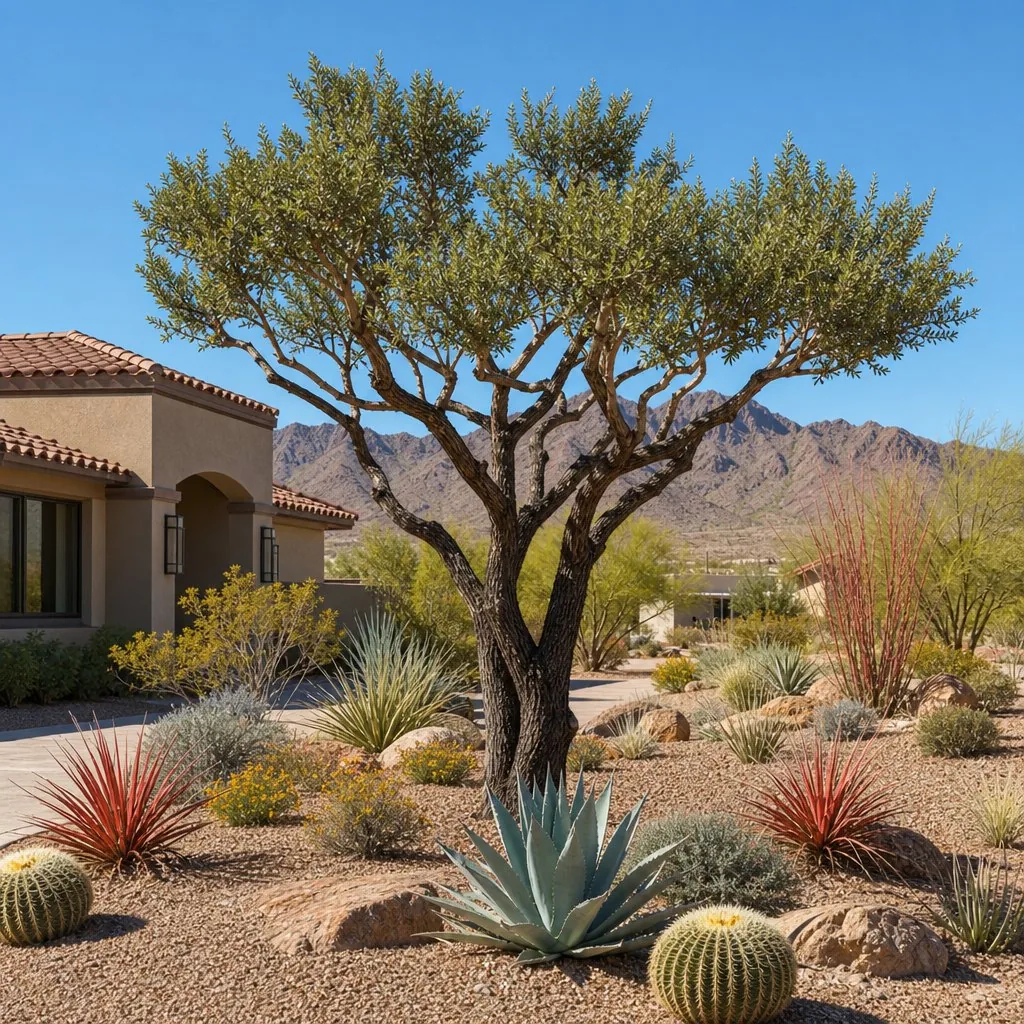
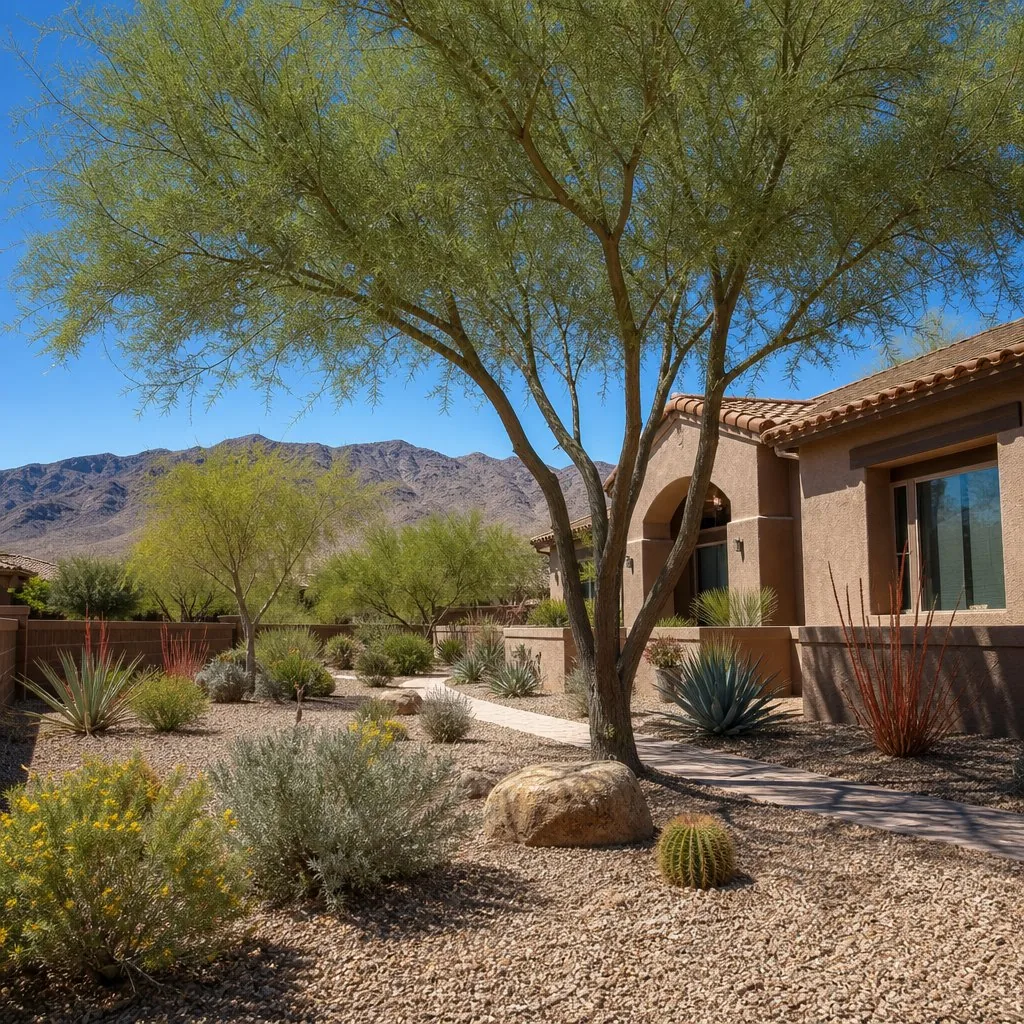
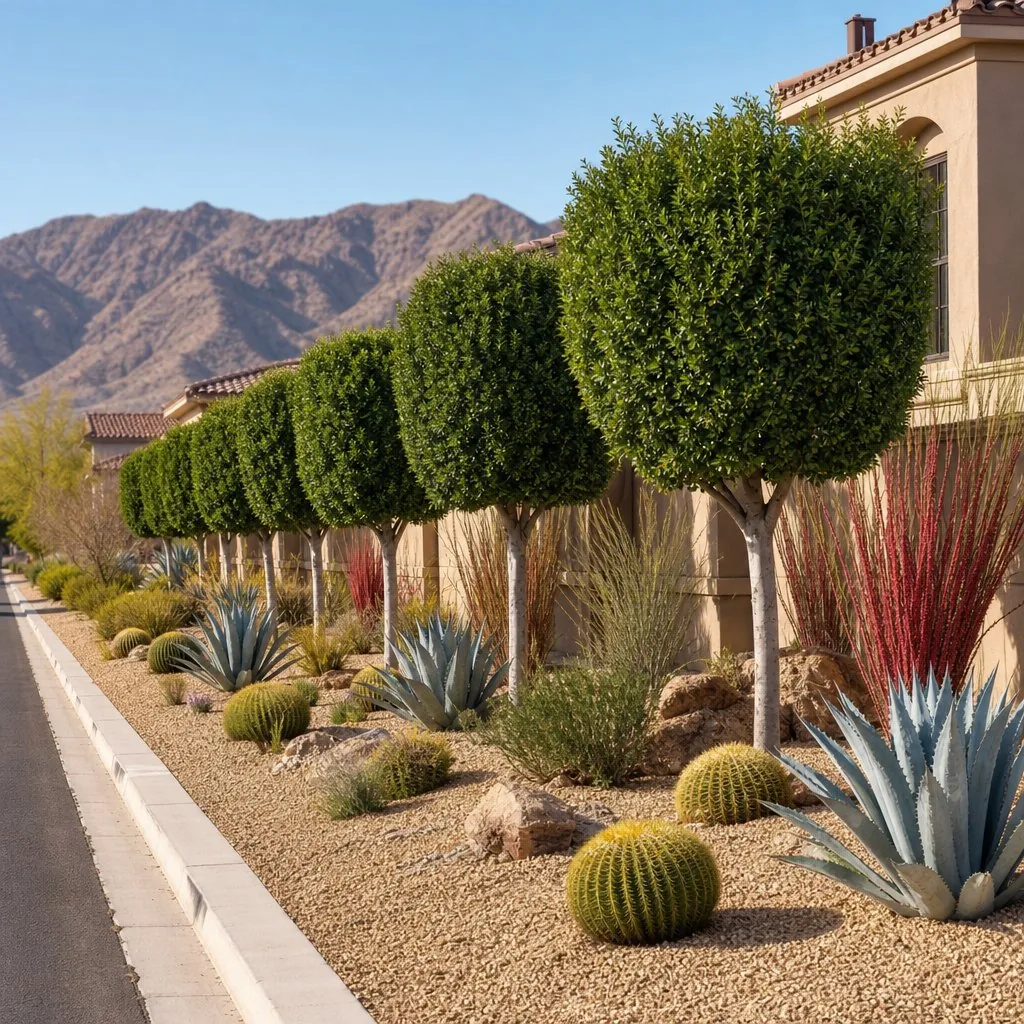
Structural correction. Crossing and rubbing limbs are removed before they wound each other; competing leaders and weak, narrow unions are addressed while still small enough to address cheaply.
Selective thinning. Thinning reduces the sail area wind can push against and lets air move through the canopy. Properly done it is selective and restrained; done as a blanket reduction it removes the leaf area the tree needs to feed itself.
Clearance pruning. Branches are cleared from roofs, walls, drives, walkways, and overhead lines with future growth allowed for, so the clearance lasts.
The Las Vegas tree scope closes only after debris and access routes are checked.
Cuts are made at the correct point relative to the branch collar so the tree can seal its own wounds. Flush cuts remove the tissue required to close the wound; over-long stubs simply die back. Larger limbs are removed in stages so that falling weight cannot tear bark down the trunk.
Topping — cutting main limbs back to stubs for height control — is worth naming because it is still common and it is genuinely harmful. It strips the foliage the tree lives on, forces dense and weakly attached regrowth, and creates wounds the tree cannot close. That regrowth is exactly what fails in the next wind event. Height concerns are properly managed by selective reduction to suitable lateral branches.
Cost depends on the number and size of trees, their height, the amount of deadwood and structural work needed, and access. Access is often the dominant factor: a tree standing clear in an open yard is straightforward, while the same tree behind a narrow gate or overhanging a roof, a pool, a wall, or parked vehicles must be rigged down piece by piece. Debris volume and haul-away also count. We assess and quote on site, since two identical trees in different positions are very different jobs.
Timeline
Most residential jobs are finished in a single visit. Larger properties, multiple mature trees, or work requiring careful rigging over structures take longer. Clean-up is part of the same job rather than a separate return visit – trimmings, deadwood and cut debris leave with the crew.
Book trimming when you can see deadwood, crossing or rubbing limbs, growth over a roof, drive, or walkway, branches approaching overhead lines, or a canopy that has become dense and heavy. Dead, damaged, and hazardous limbs are dealt with whenever found. Heavier structural pruning is generally best carried out when the tree is under least stress rather than in the depth of summer heat, and routine attention every few years is cheaper, safer, and better for the tree than waiting for something to fail.
Local note: watering trees under the SNWA rules
Trees need deep, infrequent watering to stay healthy and well anchored, and how that water is delivered is governed here. The Southern Nevada Water Authority assigns watering days by address group, prohibits sprinkler irrigation between 11 a.m. and 7 p.m. from May through August, and prohibits sprinkler watering on Sundays year-round, while drip irrigation is allowed up to four days per week in sessions of roughly 30 to 90 minutes. Deep watering out at the drip line, where the feeder roots actually are, produces a better-anchored and more heat-tolerant tree than frequent shallow watering at the trunk — and drip’s four-day allowance leaves ample room to do it properly. (Source: Southern Nevada Water Authority.)
Frequently asked questions
When is the best time to trim trees in Las Vegas? Dead, damaged, or hazardous limbs are removed at any time. Structural pruning is best when the tree is least stressed rather than during peak summer heat, and wind-reduction work is best done before it is needed.
Does thinning guarantee a Las Vegas tree will withstand wind? It does not. The written recommendation should describe observed concerns, pruning objectives, cut limits, exclusions, and whether a formal risk evaluation is advised.
Do you haul away the debris? Yes. Removal and site clean-up are included in the quote rather than added afterwards.
For Las Vegas properties, define building clearance with measurements. The proposal should locate the affected roof edge or wall, state the finished separation requested, and document equipment access. Branches near energized conductors belong in a separately authorized line-clearance process rather than a general tree-work promise.
I am converting my yard under AB356 — what about my trees? Trees within a conversion area need their irrigation deliberately carried across to the new system. Losing an established tree because its water source was removed during a conversion is an avoidable and expensive mistake.
How much can be removed at once? Less than most people expect. A tree needs its leaf area to feed itself, so significant work is better staged across visits than done all at once.
Sources
Southern Nevada Water Authority — watering rules and Nevada AB356 turf requirements: snwa.com.
Request a tree-risk review with Mojave soil constraints
Get a Free Quote
Describe the Mojave property priorities and the areas included in the request.
Set the Priorities for This Mojave Project
Identify the hot spots, water zones, access, and maintenance goals so the Las Vegas work can be estimated against a clear brief.
Get a Free QuoteFrequently Asked Questions
How should tree-pruning scope account for a Las Vegas property's water budget?
Begin by separating planted, turf, hardscape and runoff areas, then document how each irrigated zone is intended to operate. The tree-pruning scope recommendation should show which water demand it changes and which existing demand remains.
Where does reflected heat matter on this Las Vegas tree-pruning scope project?
Walls, pavement and west-facing exposures can create different conditions within one property. Mark those surfaces during the site walk and evaluate materials or planting locations against the measured exposure rather than a citywide rule of thumb.
What evidence belongs in a Las Vegas tree-pruning scope proposal?
Include a site sketch, measured quantities, irrigation observations, preparation details, named materials, exclusions and a cleanup plan. The proposal should connect every major action to a visible condition or owner priority.