Last updated: September 30, 2026
How much does landscaping cost in Las Vegas?
The number that moves a Las Vegas budget most is not a price, it is a rebate. Removing grass pays $7 per square foot here — $5 from the Southern Nevada Water Authority plus $2 from the Las Vegas Valley Water District — up to 10,000 square feet, then $4.50.
On a 1,000 square foot front lawn that is $7,000, and SNWA’s own guidance is that the rebate covers about half the cost of a good-quality conversion, up to 75 percent for some. Which is why the honest answer to “what does it cost” here starts with what you get back.
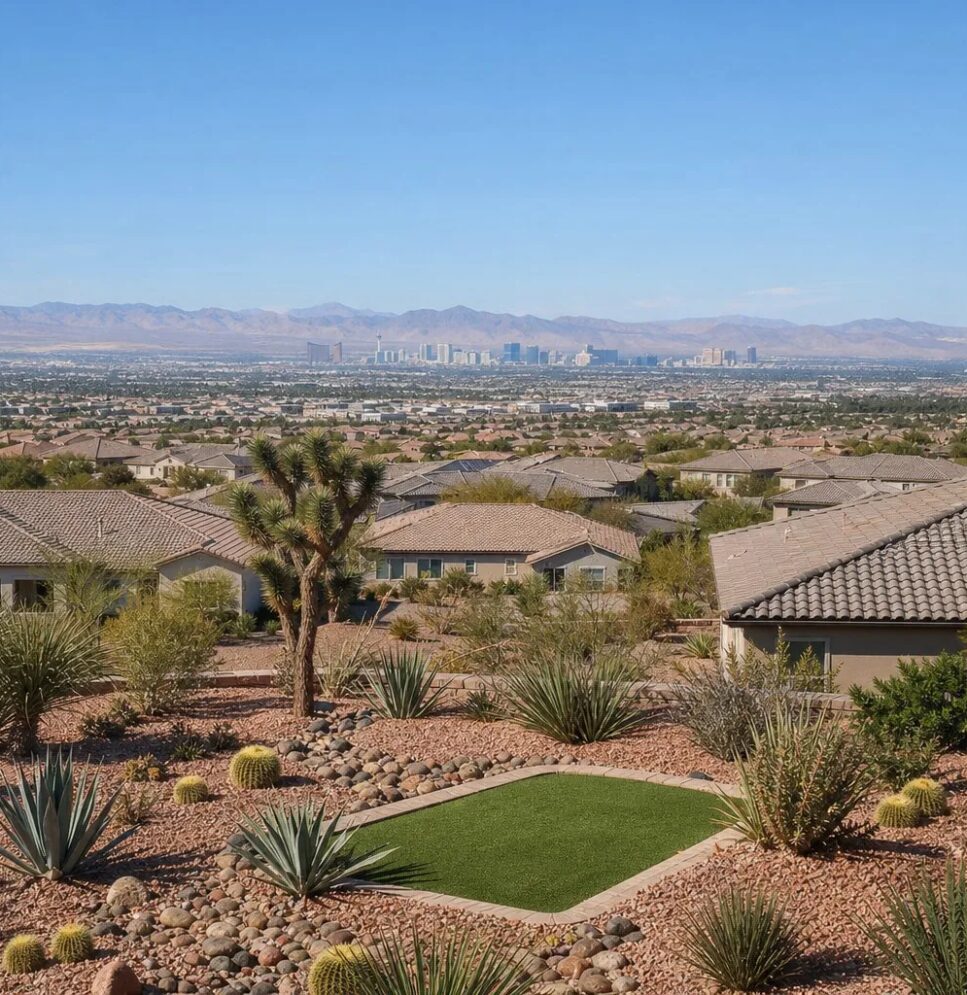
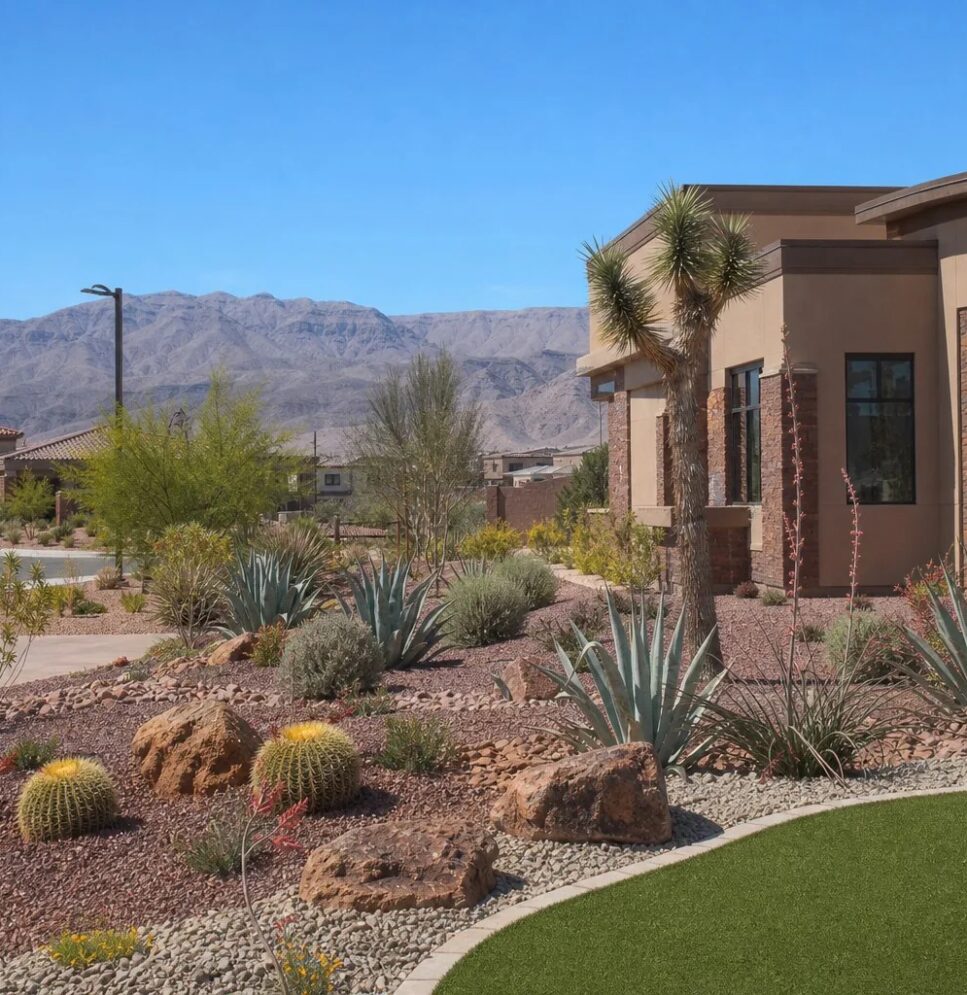
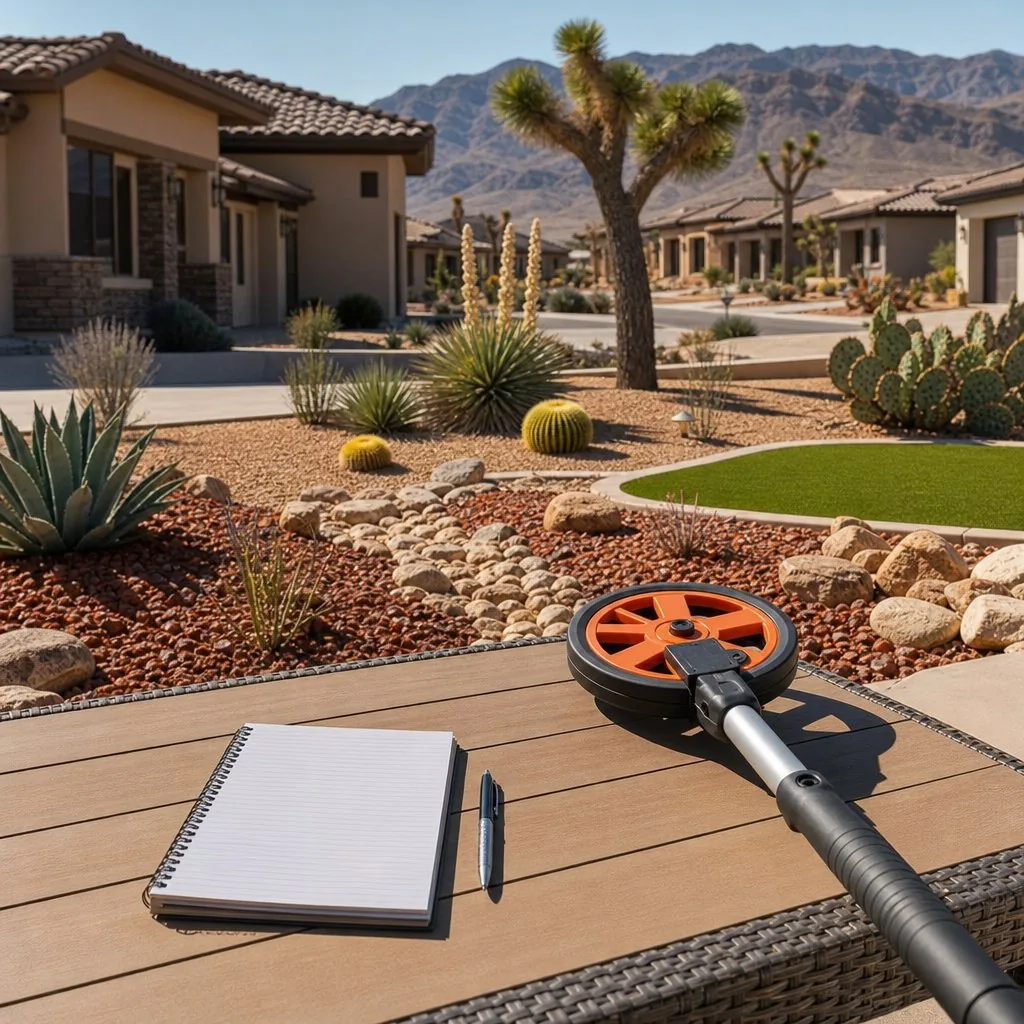
Every figure read from SNWA and LVVWD on 31 August 2026.
How much do SNWA and LVVWD pay per square foot to remove grass?
SNWA’s Water Smart Landscapes rebate pays $5.00 per square foot on the first 10,000 square feet, and LVVWD adds $2.00 for its residential customers, so $7.00 combined. Above 10,000 square feet the combined rate is $4.50. A 400 square foot minimum project returns $2,800. Removing 1,000 square feet returns $7,000, and 2,500 square feet returns $17,500.
| Programme | Rate | Cap or condition |
|---|---|---|
| SNWA Water Smart Landscapes, residential | $5.00 per sq ft | First 10,000 sq ft |
| LVVWD additional incentive | $2.00 per sq ft | LVVWD residential customers |
| Combined, up to 10,000 sq ft | $7.00 per sq ft | — |
| Combined, above 10,000 sq ft | $4.50 per sq ft | — |
| Businesses, HOAs, multi-family (SNWA) | $5.00 then $1.50 per sq ft | First 10,000 sq ft, then thereafter |
| Tree Enhancement Program | $100 per new tree | Up to 100% canopy coverage |
What that looks like on real yards:
| Lawn removed | SNWA $5 | LVVWD $2 | Total back |
|---|---|---|---|
| 400 sq ft (programme minimum) | $2,000 | $800 | $2,800 |
| 1,000 sq ft | $5,000 | $2,000 | $7,000 |
| 2,500 sq ft | $12,500 | $5,000 | $17,500 |
Do I need to reapply for the $7 rebate if I applied before September 18, 2025?
Yes, if you still have grass. The Las Vegas Valley Water District says customers who applied before September 18, 2025 must reapply to receive the $7 rebate, and SNWA will contact them for an additional site visit. An old approved application is worth $5 a square foot. On 1,000 square feet, reapplying is worth $2,000 more.
The Las Vegas Valley Water District states that customers who applied before September 18, 2025 and still have grass must reapply to receive the $7 rebate, and that SNWA will contact them for an additional site visit.
An approved application sitting in a drawer is worth $5 a square foot. The same yard reapplied is worth $7. On 1,000 square feet that is $2,000 for filling in a form again. There is no published expiry on the additional incentive, but the reapplication is not optional for the higher rate.
What mistake makes a Las Vegas lawn conversion ineligible for the rebate?
Removing the lawn before approval. SNWA requires a pre-conversion site visit once the application is completed, and pulling grass without that approval makes the conversion ineligible, not reduced. On a 1,000 square foot lawn that’s $7,000 lost. Applications rise in spring and autumn and site-visit waits get longer, so book the visit before the crew is scheduled.
SNWA states it plainly: after the application is completed you must take part in a pre-conversion site visit, and removing your lawn without approval will make your conversion ineligible. Not reduced. Ineligible.
On a 1,000 square foot lawn that is $7,000 lost to doing the right work in the wrong order, and the only thing preventing it is an appointment. SNWA also warns that applications rise in spring and autumn, lengthening the wait for site visits, so book before the crew is scheduled.
What conditions does the SNWA turf rebate come with?
The minimum project is 400 square feet, and you get twelve months from the pre-conversion inspection, with a discretionary extension of up to 90 days. A conservation easement is recorded with Clark County in perpetuity. Drip must include a filter, a pressure regulator and emitters rated at 20 gallons per hour or less, plus 50 percent canopy coverage at maturity.
- Minimum project 400 square feet of lawn or water surface. Smaller may be accepted at SNWA’s discretion where less than 400 sq ft exists.
- Twelve months to complete, from the pre-conversion inspection, with a discretionary extension of up to 90 days. Corrective work gets 60 days from notice or the remainder of the twelve months, whichever is greater.
- A conservation easement is recorded with Clark County, in perpetuity, restricting certain uses of the converted area. It runs with the land, not with you. This is the term most worth reading before signing.
- Drip irrigation is specified, not suggested: filter, pressure regulator, emitters rated at 20 gallons per hour or less, free of leaks, with the components visible for inspection.
- 50 percent canopy coverage at maturity from the plant palette.
- Treebate trees need a minimum canopy value of 236 square feet (a 20-foot canopy at maturity), an ANSI-Z60 #15 container or larger, at least 5 feet tall, with a 1 to 2 inch caliper.
- HOA, business and multi-family conversions over 10,890 square feet (a quarter acre) need written approval from the local jurisdiction’s planning department as a condition of eligibility.
- Rebates of $2,000 or more from SNWA in a calendar year require an IRS Form W-9, and SNWA notes rebates may be taxable income.
Once the easement is recorded, SNWA states the cheque is processed and mailed generally within 10 business days of the recording.
The other half of the cost is the water bill
A conversion changes a recurring cost, not just a one-off one. About 60 percent of Southern Nevada’s water is used outdoors, and outdoor water evaporates rather than being recycled, so it earns no return-flow credit and counts against the Colorado River allowance. That is the reason the rebate is as large as it is.
The watering schedule also constrains what a landscape can be. Sprinkler irrigation drops to three assigned days a week from September 1 and one day a week from November 1, with no Sunday watering in any season. A design that needs more water than the calendar allows is a design that will not survive here regardless of budget. The full schedule is on our Las Vegas watering rules page.
Why we will not quote a citywide install price
Because three conditions on your own lot move it further than any city average, and a number that ignores them is worse than no number.
What the irrigation has to become. The rebate requires drip with a filter, regulator and low-flow emitters, visible for inspection. If one valve currently serves both lawn and beds, that is a re-zoning job rather than a nozzle change.
What the old lawn was hiding. Turf and thatch removal usually exposes a grade problem the lawn was masking. Correcting it before the rock goes down is the difference between a conversion that holds and one that migrates to the low corner after two monsoons.
Which trees you intend to keep. Mature canopy is the most valuable thing in an older Las Vegas yard and the easiest to kill during a conversion. An established tree needs its own deep zone at the dripline, installed as part of the work.
What we do instead of a phone quote
We measure the irrigated area, confirm which SNWA and LVVWD rules apply to your address, check whether an earlier application needs reapplying at the higher rate, and put the rebate against the scope so you can see the net number rather than the gross one. You are not obliged to use an SNWA Water Smart Landscaper either — that list is contractors who are licensed, bonded and trained by the Authority, and you may use anyone, or do the work yourself.
Frequently asked questions
How much does landscaping cost in Las Vegas? The dominant figure is the turf conversion rebate rather than an install price: $7 per square foot for LVVWD residential customers, made up of $5 from SNWA and $2 from LVVWD, up to 10,000 square feet, then $4.50. SNWA states the rebate covers roughly half the cost of a good-quality conversion and up to 75 percent for some customers.
How much does the SNWA rebate pay in Las Vegas? $5 per square foot for the first 10,000 square feet for single-family residential properties. The Las Vegas Valley Water District adds $2 per square foot for its residential customers, making $7 combined and $4.50 above 10,000 square feet.
Do I need approval before removing my grass? Yes, and this is the condition that voids rebates. After the application is completed you must take part in a pre-conversion site visit, and SNWA states that removing your lawn without approval will make your conversion ineligible.
I applied a while ago. Do I get the $7 rate? Not automatically. LVVWD states that customers who applied before September 18, 2025 and still have grass must reapply for the $7 rebate, and that SNWA will contact them for an additional site visit.
Is there a minimum lawn size for the rebate? Yes, 400 square feet of lawn or water surface, though SNWA may accept smaller projects at its discretion where less than 400 square feet exists in the project area.
How does the $100 tree bonus work? The Tree Enhancement Program pays $100 for each new tree up to 100 percent canopy coverage. Trees need a minimum canopy value of 236 square feet at maturity, an ANSI-Z60 #15 container or larger, a minimum height of 5 feet and a 1 to 2 inch caliper, irrigated by drip.
What is the conservation easement? The rebate is conditional on the property owner granting a conservation easement, recorded with Clark County, restricting certain uses of the converted area in perpetuity. It runs with the property rather than the current owner.
What irrigation does the rebate require? Drip irrigation including a filter, a pressure regulator and emitters rated at 20 gallons per hour or less, free of malfunctions and leaks, with the required components visible for inspection.
Is the rebate cheque taxable? SNWA states rebates may be considered taxable income and recommends consulting a tax adviser. Rebates totalling $2,000 or more in a calendar year require an IRS Form W-9 before payment.
Does the nonfunctional grass law force me to remove my lawn? Not if you own a single-family home. The 2021 law applies from January 1, 2027 to properties not zoned exclusively for single-family residences. SNWA states it does not apply to grass at single-family residences.
Our HOA wants to convert common area. What changes? Where the conversion area exceeds 10,890 square feet, roughly a quarter acre, HOA, business and multi-family properties must obtain written approval from the local jurisdiction’s planning department as a condition of eligibility. Start that early, because it gates the money.
Why will you not give me a price over the phone? Because the irrigation rebuild, the grade under the old lawn and the trees you intend to keep move a Las Vegas conversion further than any citywide average does, and none of the three can be assessed without seeing the property.
Sources
- SNWA Water Smart Landscapes rebate — rates, pre-conversion approval, minimum size, deadlines, conservation easement, irrigation specification, Tree Enhancement Program, tax form threshold: snwa.com/rebates/wsl. Read 31 August 2026.
- Las Vegas Valley Water District — the additional $2 per square foot, the combined $7 and $4.50 rates, and the reapplication requirement: lvvwd.com/conservation/rebates. Read 31 August 2026.
- SNWA — nonfunctional turf law, single-family exclusion, consumptive use share: snwa.com laws and ordinances. Read 31 August 2026.
- SNWA — seasonal watering schedule: snwa.com irrigation clock. Read 31 August 2026.
Method note: every rate, cap, threshold and deadline on this page is quoted from the SNWA and LVVWD pages listed above, read on 31 August 2026. SNWA states the rebate is paid at the rate in place when the project is complete, and rates change. Confirm your own rate before budgeting. Nothing here is a service quote.
Related Las Vegas Resources
Las Vegas Landscaping Costs: Data
Every figure below was read from SNWA and the Las Vegas Valley Water District on 31 August 2026. Source of record: Southern Nevada Water Authority and LVVWD.
| Measure | Value |
|---|---|
| Combined turf rebate, LVVWD residential | $7.00 per sq ft up to 10,000 sq ft |
| Combined rate above 10,000 sq ft | $4.50 per sq ft |
| SNWA share | $5.00 per sq ft |
| LVVWD share | $2.00 per sq ft |
| Non-residential SNWA rate | $5.00 then $1.50 per sq ft |
| Reapplication cutoff | Applications before 18 September 2025 must reapply |
| Minimum project size | 400 sq ft |
| Time to complete | 12 months, extension up to 90 days |
| Conservation easement | Recorded with Clark County, in perpetuity |
| Drip emitter maximum flow | 20 gallons per hour |
| Canopy coverage requirement | 50 percent |
| Tree bonus | $100 per new tree |
| Minimum tree canopy value | 236 sq ft at maturity |
| Planning approval threshold | 10,890 sq ft for HOA, business, multi-family |
| Tax form threshold | $2,000 in a calendar year |
| Share of rebate against project cost | About half, up to 75 percent for some |
| Share of Southern Nevada water used outdoors | About 60 percent |
Change log
| Observed | Change recorded |
|---|---|
| 2026-08-31 | Corrected the rebate rate: the page published $5 and $3.50, superseded by the combined $7 and $4.50 once the LVVWD $2 incentive is included. Added the reapplication rule for applications before 18 September 2025, the pre-conversion approval that voids the rebate, the perpetual conservation easement, the irrigation specification and the tax threshold. Added an answer-first capsule and Dataset schema. |
Cite this: “Las Vegas Landscaping Costs: Data,” updated 2026-08-31, https://lasvegaslandscapepros.com/las-vegas-landscaping-pricing-guide/#cost-dataset
How far does the grass rebate go toward a conversion?
Grass removal pays $7 per square foot, $5 from the Southern Nevada Water Authority and $2 from the Las Vegas Valley Water District, on the first 10,000 square feet and $4.50 after. A 1,000 square foot front lawn returns $7,000. Las Vegas Landscape Pros prices Las Vegas conversions around that rebate, which SNWA says covers about half the job.
What rebate figures should a lawn conversion budget start from?
The rebate covers about half the project cost, and up to 75 percent for some conversions, at $7 per square foot on the first 10,000 square feet and $4.50 after. A 1,000 square foot front lawn returns $7,000, plus $100 for each new tree. Las Vegas Landscape Pros prices Las Vegas conversions around that rebate.